

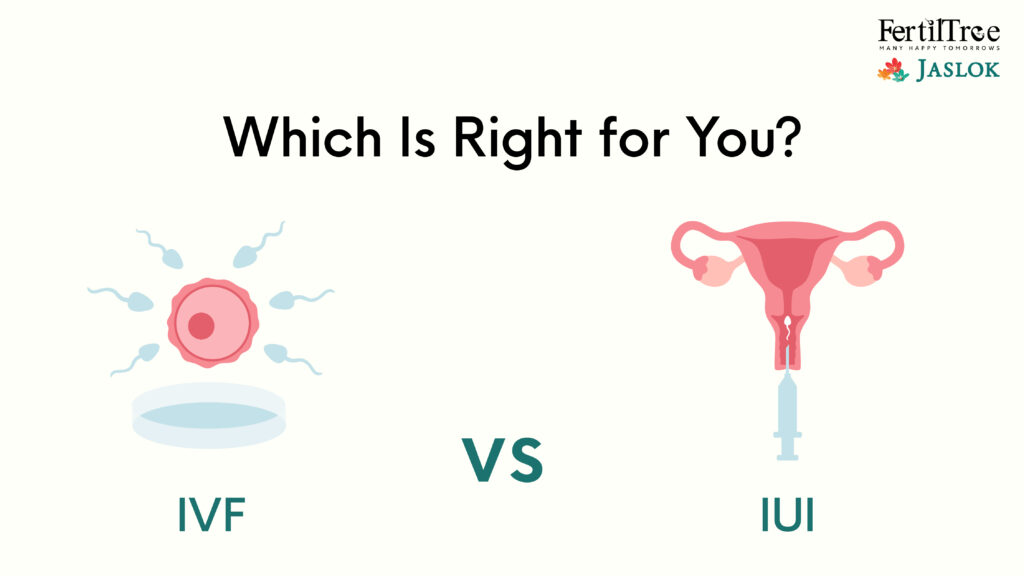
IVF vs IUI: Which Is Right for You?
When a couple faces difficulty conceiving, one of the first decisions they encounter is which fertility treatment to pursue. In most cases, the conversation comes down to two options: intrauterine insemination (IUI) and in-vitro fertilisation (IVF). Both are well-established assisted reproductive technologies (ART), but they differ substantially in how they work, who they are best suited for, and the results they deliver.
Choosing between IUI and IVF is not simply a matter of preference or cost – it is a clinical decision that depends on your age, the specific cause of infertility, ovarian reserve, tubal status, semen parameters, and how long you have been trying to conceive. Making the right choice early can save months of time, reduce emotional and financial strain, and significantly improve your chances of a successful pregnancy.
This page provides a detailed, evidence-based comparison of IVF and IUI – written for patients who want to understand both options clearly before consulting their fertility specialist. At FertilTree, based at Jaslok Hospital, Mumbai, we guide every patient through this decision with personalised clinical assessments and transparent communication.
ⓘ Who is this page for?
Couples exploring fertility treatment for the first time and unsure where to start.Patients recommended IUI or IVF by a gynaecologist who want a clearer understanding of both options.Women under 35 with unexplained infertility weighing IUI before committing to IVF.Couples who have had 2–3 failed IUI cycles and are considering moving to IVF.Anyone seeking a clinical, unbiased comparison to make an informed decision.
What Is IUI? Procedure, Candidacy, and Success Rates
Intrauterine insemination (IUI) is a fertility procedure in which washed and concentrated sperm are placed directly into the uterus using a fine catheter, timed to coincide with ovulation. The goal is to shorten the distance sperm must travel and increase the number of motile sperm that reach the fallopian tubes, thereby improving the chances of natural fertilisation. For a detailed walkthrough, see our guide on symptoms of IUI success.
Who Is a Good Candidate for IUI?
IUI is typically the first-line treatment for couples with mild fertility challenges. Your specialist may recommend IUI if:
- Unexplained infertility: No identifiable cause after standard fertility workup, and the woman is under 35 with adequate ovarian reserve.
- Mild male factor: Slightly reduced sperm count or motility, but still within treatable range after semen processing. Read more: minimum sperm motility for IVF.
- Ovulatory disorders: Women with PCOS or irregular ovulation who respond to ovulation induction medications. See: PCOS treatment in Mumbai.
- Cervical factor infertility: Hostile cervical mucus that impedes sperm transport.
- Donor sperm: Single women or same-sex couples using donor insemination.
IUI Success Rates
Per-cycle success rates for IUI range from 5–25%, depending on the woman’s age, the underlying cause of infertility, whether ovarian stimulation is used, and the post-wash sperm count. Success rates are highest in women under 35 with unexplained infertility in a stimulated cycle. After 3–4 unsuccessful IUI cycles, most fertility guidelines recommend moving to IVF, as the cumulative probability of success with further IUI cycles diminishes significantly.
What Is IVF? Procedure, Candidacy, and Success Rates
In-vitro fertilisation (IVF) is an assisted reproductive technique in which eggs are retrieved from the ovaries after controlled hormonal stimulation, fertilised with sperm in a laboratory, and the resulting embryo(s) transferred to the uterus. IVF bypasses many of the natural barriers to conception – tubal transport, cervical factors, and sperm-egg interaction – making it the most versatile and effective fertility treatment available. For a complete walkthrough, see our step-by-step IVF procedure guide.
Who Is a Good Candidate for IVF?
IVF is recommended when the cause or severity of infertility makes IUI unlikely to succeed, or when IUI has already been attempted without results:
- Tubal factor infertility: Blocked or damaged fallopian tubes. Read more: getting pregnant with blocked fallopian tubes.
- Moderate-to-severe male factor: Low sperm count, poor motility, or abnormal morphology requiring ICSI. See: ICSI treatment.
- Advanced maternal age (35+): Diminished ovarian reserve and egg quality make IVF’s higher per-cycle success rate clinically preferable. See: IVF success rates by age.
- Endometriosis (moderate-to-severe): Pelvic adhesions, endometriomas, or tubal damage caused by endometriosis.
- Recurrent IUI failure: Three or more unsuccessful IUI cycles. See: understanding IVF failure and the way ahead.
- Genetic screening required: PGT to screen embryos for chromosomal or single-gene disorders. See: PGT at FertilTree.
- Low AMH / diminished ovarian reserve: When maximising egg retrieval per cycle is critical. See: what is a good AMH level for IVF?.
IVF Success Rates
IVF success rates are significantly higher than IUI, typically ranging from 30–50% per cycle for women under 35 using their own eggs, and up to 60–70% cumulatively across 2–3 cycles. Success rates decline with age, particularly after 38, but can be improved with techniques such as PGT-A, embryo grading, and optimised frozen embryo transfer protocols
IVF vs IUI: Head-to-Head Comparison
The following table summarises the key clinical, procedural, and practical differences between IUI and IVF:
Parameter | IUI | IVF |
How It Works | Washed sperm placed directly into the uterus at time of ovulation | Eggs retrieved, fertilised in the lab, embryo(s) transferred to uterus |
Fertilisation | Occurs naturally inside the body (in vivo) | Occurs in the laboratory (in vitro) |
Anaesthesia | Not required | Mild anaesthesia for egg retrieval |
Success Rate (per cycle) | 5–25% | 30–50% (under 35) |
Cycle Duration | ~15 days | ~15–18 days |
Number of Injections | Fewer (ovulation induction only) | More (stimulation + trigger) |
Embryo Selection | Not possible | Yes – grading and PGT available |
How Your Fertility Specialist Decides: The Clinical Decision Framework
The IUI vs IVF decision is not one-size-fits-all. At FertilTree, the treatment recommendation is based on a systematic evaluation of multiple clinical factors:
- Age and ovarian reserve: Women under 35 with normal AMH and antral follicle count may reasonably begin with IUI. Women 35+ are often advised to proceed directly to IVF to avoid losing valuable time.
- Cause of infertility: Tubal blockage, severe male factor, or endometriosis Stage III–IV make IVF the first-line choice. Unexplained infertility or mild PCOS may warrant 2–3 IUI cycles first.
- Duration of infertility: Couples trying for more than 2–3 years are more likely to benefit from IVF’s higher per-cycle efficacy.
- Previous treatment history: After 3 failed IUI cycles, continuing IUI yields diminishing returns. See: 3 failed IVF cycles – what next?.
- Genetic screening needs: If PGT is required to avoid transmission of a genetic disorder, IVF is the only option.
⚠️ Clinical note
Starting with IUI when IVF is clearly indicated – for example, in cases of bilateral tubal blockage or severe male factor – is not a conservative approach; it is a delay that reduces cumulative success rates and increases overall treatment costs. An experienced fertility specialist will recommend the right treatment from the outset based on your clinical profile.
For a comprehensive initial assessment, visit our diagnosis of infertility page or our guide on infertility management at FertilTree.
Why Choose FertilTree for IUI or IVF Treatment in Mumbai?
The decision between IUI and IVF is only as good as the clinical assessment behind it. Here is what sets FertilTree apart:
Comprehensive Diagnostic Workup Before Any Treatment
No treatment is recommended at FertilTree without a thorough infertility diagnosis – including hormonal profiling, AMH, antral follicle count, tubal patency testing, semen analysis, and genetic screening where indicated. This ensures the right treatment from the start.
Led by One of India’s Most Experienced Fertility Teams
FertilTree IVF Centre, based at Jaslok Hospital, is led by Dr. Firuza Parikh, a Padma Shri awardee with over 35 years of experience. The multidisciplinary team includes reproductive endocrinologists, embryologists with doctoral-level expertise, and male infertility specialists – all collaborating under one roof.
Advanced IVF Laboratory and Techniques
When IVF is indicated, patients benefit from state-of-the-art facilities including ICSI, IMSI, time-lapse embryo monitoring, vitrification, laser-assisted hatching, and preimplantation genetic testing. These technologies maximise the chance of selecting the best embryo for transfer.
Honest, Patient-Centred Guidance
FertilTree does not default to the most expensive option. If IUI is clinically appropriate, it is recommended first. If IVF is clearly indicated, the team will explain why – with data, not pressure. Every patient receives a written treatment plan with expected timelines, success estimates, and costs before beginning any procedure.
Frequently Asked Questions
Can I try IUI before IVF?
Yes, and many patients do. IUI is a reasonable first step for couples with unexplained infertility, mild male factor, or ovulatory disorders – provided the woman has at least one patent fallopian tube and is under 35–38. However, 2–3 cycles is typically the recommended limit before reassessing.
Is IUI less painful than IVF?
IUI is a simple outpatient procedure that takes a few minutes and does not require anaesthesia. Most women describe it as similar to a routine cervical examination. IVF involves a more intensive stimulation phase and egg retrieval under mild anaesthesia, but the overall discomfort is manageable. Read more: how many injections are needed for IVF?
Is IVF worth the higher cost compared to IUI?
It depends on the clinical context. While IVF costs more per cycle, its per-cycle success rate is 2–4 times higher than IUI. For patients who undergo 3–4 unsuccessful IUI cycles before moving to IVF, the cumulative cost of failed IUI often approaches a single IVF cycle – with less time lost. The FASTT trial (Reindollar et al., NEJM, 2010) demonstrated that proceeding directly to IVF after failed clomiphene-IUI resulted in lower per-pregnancy costs. See: IVF costs in Mumbai.
Can IUI work for male infertility?
IUI can be effective for mild male factor infertility – specifically when the post-wash total motile sperm count exceeds 5–10 million. For more severe cases, IVF with ICSI is recommended. Learn more: male infertility specialist in Mumbai.
What happens if IUI fails three times?
After 3 failed IUI cycles, your specialist will reassess and, in most cases, recommend transitioning to IVF. Continuing IUI beyond 3–4 cycles without a change in strategy is not supported by evidence. FertilTree provides a detailed review after each failed cycle. Read: 3 failed IVF cycles – understanding what went wrong.
Can I freeze eggs or embryos with IUI?
No. IUI does not involve egg retrieval, so egg freezing or embryo freezing is not possible. If fertility preservation is a goal, an IVF-based retrieval cycle is required. See: egg freezing process in India.


