

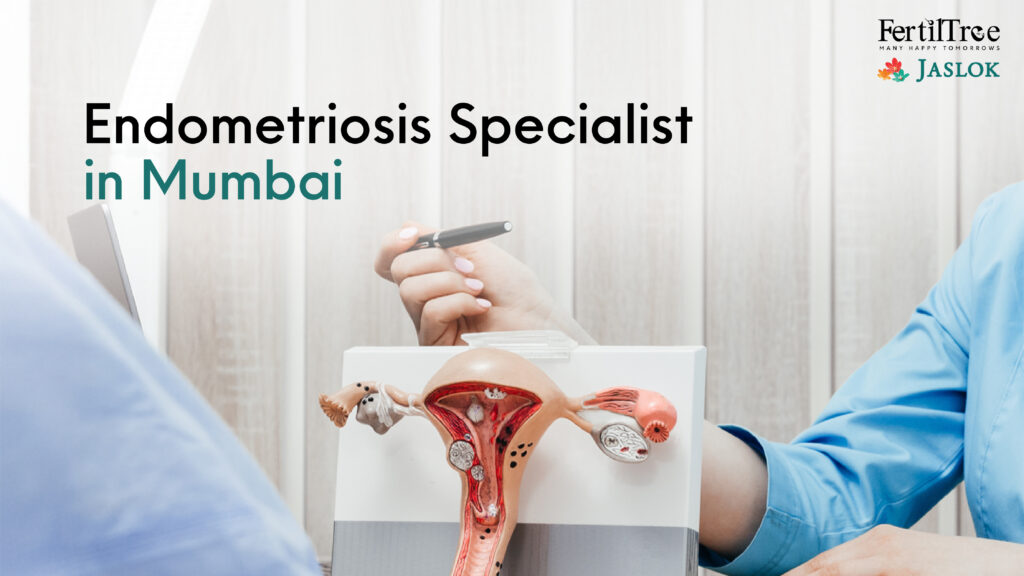
Endometriosis Specialist in Mumbai
Expert Diagnosis, Treatment & Fertility Care at FertilTree — Jaslok Hospital, Mumbai
Medically reviewed by: Dr. Firuza Parikh, MD, FRCOG (London), FICOG — Founder & Director, FertilTree IVF Centre, Jaslok Hospital, Mumbai. Over 35 years of clinical experience in reproductive medicine and endometriosis surgery. Padma Shri awardee and author of The Complete Guide to Becoming Pregnant (Penguin Random House).
Clinical contributors: Dr. Rishma Pai (FRCOG), Dr. Anahita Chauhan (Reproductive Endocrinologist), Dr. Prachi Benara (Embryologist, PhD). See the full FertilTree faculty.
If you have been living with chronic pelvic pain, painful periods, or unexplained difficulty getting pregnant, endometriosis may be the underlying cause. It is a condition that affects roughly 190 million women globally — approximately 10% of women of reproductive age, according to the World Health Organisation. Yet it takes an average of 7–10 years to receive a proper diagnosis. That delay is not just frustrating — it can have lasting consequences for fertility, mental health, and quality of life.
Finding an experienced endometriosis specialist in Mumbai who combines diagnostic skill with fertility expertise makes a measurable difference in outcomes. At FertilTree, based at Jaslok Hospital, Mumbai, patients receive comprehensive, evidence-based care — from early diagnosis through advanced surgical and fertility treatment — under one multidisciplinary team.
ⓘ Who is this page for? Women experiencing chronic pelvic pain, painful periods, or pain during intercourse. Women who have been trying to conceive for 6–12 months without success. Patients already diagnosed with endometriosis who are seeking a second opinion or advanced surgical or fertility care. Anyone with a family history of endometriosis seeking proactive evaluation. |
What Is Endometriosis? A Clinical Overview
Endometriosis is a chronic, oestrogen-dependent inflammatory disease in which tissue histologically similar to the uterine lining (endometrium) implants and grows outside the uterus — most commonly on the ovaries, fallopian tubes, uterosacral ligaments, pelvic peritoneum, and sometimes on the bowel, bladder, or diaphragm. During each menstrual cycle, these ectopic implants respond to hormonal fluctuations: they thicken, break down, and bleed. Because the blood has no exit route, it triggers chronic inflammation, adhesion (scar tissue) formation, and, on the ovaries, the development of endometriomas (“chocolate cysts”).
Disease Staging and Clinical Significance
The American Society for Reproductive Medicine (ASRM) classifies endometriosis into four stages — Minimal (I), Mild (II), Moderate (III), and Severe (IV) — based on the location, depth, and extent of implants and adhesions. However, clinicians and researchers increasingly
recognise that staging does not reliably correlate with symptom severity or fertility prognosis. A patient with Stage I disease may experience debilitating pain, while a patient with Stage IV may present primarily with infertility and minimal discomfort. The AAGL/ESGE Endometriosis Fertility Index (EFI) and newer classification systems are now used alongside ASRM staging to better predict reproductive outcomes.
Three Subtypes of Endometriosis
Modern pelvic imaging and surgical assessment categorise endometriosis into three subtypes, each with distinct diagnostic and treatment implications:
- Superficial peritoneal endometriosis (SPE): Lesions on the pelvic peritoneum. These are the most common and can still cause significant pain through inflammatory mediators and nerve involvement.
- Ovarian endometriomas (OMA): Cystic lesions on the ovary filled with old haemolysed blood. They can reduce ovarian reserve and affect egg quality.
- Deep infiltrating endometriosis (DIE): Lesions penetrating >5mm below the peritoneal surface, often involving the rectovaginal septum, bowel, bladder, or ureters. DIE is the most surgically complex subtype and requires specialist excision.
Symptoms That Warrant Specialist Evaluation
Many women normalise their endometriosis symptoms, assuming severe period pain is simply part of life. This normalisation, combined with a lack of awareness among some healthcare providers, is a leading contributor to the diagnostic delay observed in peer-reviewed literature. The following symptoms should prompt evaluation by an endometriosis specialist in Mumbai:
- Dysmenorrhoea: Severe menstrual pain that limits daily activities, does not respond to over-the-counter NSAIDs, or has worsened progressively over time.
- Chronic pelvic pain (CPP): Non-cyclical pain in the lower abdomen or back persisting for six months or more.
- Dyspareunia: Deep pelvic pain during or after sexual intercourse, often localised posteriorly.
- Dyschezia and dysuria: Painful bowel movements or urination, especially during menstruation — may indicate DIE involving the bowel or bladder.
- Heavy or irregular menstrual bleeding: Including menorrhagia and intermenstrual spotting.
- Subfertility: Failure to conceive after 12 months of regular unprotected intercourse (or 6 months if aged 35+).
- Chronic fatigue and bloating: Systemic symptoms increasingly recognised in endometriosis literature as part of the disease’s inflammatory profile.
⚠️ Clinical note The absence of severe pain does not rule out endometriosis. Up to 20–25% of patients are asymptomatic and are diagnosed incidentally during fertility evaluation or surgery for another condition (Giudice & Kao, NEJM, 2004). |
Why Seeing an Endometriosis Specialist Matters?
Endometriosis is one of the most commonly misdiagnosed gynaecological conditions. Research published in Fertility and Sterility found that the average patient consults seven
physicians before receiving a correct diagnosis. Conditions such as irritable bowel syndrome (IBS), pelvic inflammatory disease (PID), and primary dysmenorrhoea are frequent misdiagnoses.
A dedicated endometriosis specialist offers three critical advantages:
- Diagnostic precision: Ability to recognise subtle sonographic markers of DIE (e.g., sliding-sign abnormalities, bowel wall thickening) and atypical presentations that general gynaecologists may overlook.
- Surgical expertise: Proficiency in laparoscopic excision rather than ablation. Evidence from a randomised controlled trial (Healey et al., 2014) demonstrated that excision surgery provides superior long-term pain relief and lower recurrence rates compared with ablation.
- Fertility integration: The ability to formulate a treatment plan that simultaneously addresses pain, preserves ovarian reserve, and optimises fertility — rather than treating these goals in isolation.
At FertilTree, the approach is multidisciplinary. Imaging, hormonal evaluation, and thorough infertility assessment are integrated from the first consultation to create a personalised, evidence-based treatment roadmap.
How Is Endometriosis Diagnosed?
While a definitive histological diagnosis historically required laparoscopic surgery, advances in imaging — particularly expert-performed transvaginal ultrasound (TVS) and MRI — have transformed the non-invasive diagnostic pathway. The 2022 ESHRE guideline now recommends that expert ultrasound should be the first-line investigation for all forms of endometriosis.
Diagnostic Pathway at FertilTree
- Detailed clinical history and pelvic examination to identify tenderness, nodularity, or reduced organ mobility.
- Expert transvaginal ultrasound (TVS) performed by specialists trained in the IDEA consensus protocol, capable of detecting ovarian endometriomas (sensitivity >90%) and deep infiltrating lesions with high accuracy.
- Pelvic MRI used selectively for surgical planning and mapping DIE extent, particularly in cases involving the rectum, ureters, or diaphragm.
- Serum markers (CA-125) as supportive evidence. CA-125 is insufficiently sensitive or specific for diagnosis on its own but can aid monitoring treatment response.
- Diagnostic and therapeutic laparoscopy when imaging is inconclusive, when surgical treatment is indicated, or when histological confirmation is required.
- Fertility-specific assessment including anti-Müllerian hormone (AMH) testing, antral follicle count (AFC), tubal patency testing, and partner semen analysis to build a complete reproductive picture.
This rigorous, protocol-driven diagnostic pathway ensures nothing is overlooked and that every treatment plan is grounded in evidence — a hallmark of top-tier endometriosis care in Mumbai.
Endometriosis Treatment Options in Mumbai
There is no one-size-fits-all solution. The right treatment depends on your age, symptom severity, reproductive goals, and the extent and subtype of disease. At FertilTree, the team
takes a personalised approach — often combining medical and surgical strategies for optimal outcomes.
1. Medical Management
For women not immediately trying to conceive, hormonal therapies can effectively manage pain and slow disease progression:
- Combined oral contraceptives (COCs): Regulate the cycle and reduce menstrual pain. Continuous (non-cyclical) use is preferred to suppress ovulation and limit endometrial stimulation.
- Progestins: Oral (dienogest, norethisterone) or intrauterine (LNG-IUS / Mirena) to suppress endometrial growth. Dienogest has robust evidence for long-term pain control with a favourable side-effect profile.
- GnRH agonists/antagonists: Short-term oestrogen suppression for severe symptoms. Newer oral GnRH antagonists (e.g., elagolix) offer add-back therapy to minimise bone-density loss.
- Analgesics and complementary care: NSAIDs for acute pain; pelvic physiotherapy, dietary modification, and psychological support for the chronic pain component.
When is medical management appropriate?
Early-stage disease (ASRM I–II) with primarily pain-related symptoms.
Patients who wish to delay fertility planning.
Post-surgical maintenance therapy to reduce recurrence risk.
As a bridge while planning IVF or egg freezing.
2. Surgical Treatment
When endometriosis is moderate-to-severe, directly impairs fertility, or causes organ dysfunction (e.g., bowel obstruction, ureteric involvement), surgery is an essential part of the treatment pathway.
- Laparoscopic excision (the gold standard): Complete removal of endometriotic implants and adhesions while preserving healthy tissue. A systematic review by Duffy et al. (Cochrane, 2020) confirmed that laparoscopic excision significantly reduces pain and improves quality of life.
- Ovarian cystectomy for endometriomas: Careful stripping technique to remove the cyst wall while minimising damage to the underlying ovarian cortex and follicular reserve.
- Complex pelvic reconstruction: For severe DIE involving the bowel (segmental resection or shaving), bladder, or ureters. FertilTree’s surgical team collaborates with colorectal and urological surgeons when needed.
Can endometriosis recur after surgery? Yes. Studies report recurrence rates of 20–40% within five years. However, thorough excision by an experienced surgeon — as opposed to superficial ablation — is associated with the lowest recurrence rates. Post-surgical hormonal suppression can further reduce recurrence. Read our detailed patient guide: Can Endometriosis Come Back After Surgery?.
3. Fertility Treatment for Endometriosis Patients
Endometriosis is one of the leading causes of female subfertility, affecting an estimated 30–50% of women who struggle to conceive. It impairs fertility through multiple pathways: tubal damage and adhesions, reduced oocyte quality, disrupted ovulation, and a hostile peritoneal environment that impedes sperm transport and embryo implantation
The good news is that many women with endometriosis achieve successful pregnancies with the right support. At FertilTree, the fertility team works in close collaboration with the surgical team to create integrated treatment plans. Depending on individual circumstances, options include:
- Ovarian stimulation with intrauterine insemination (IUI): Suitable for mild-to-moderate disease with patent fallopian tubes and normal semen parameters.
- In-vitro fertilisation (IVF): The most effective option for moderate-to-severe endometriosis, tubal factor, or diminished ovarian reserve. Protocols are specifically adapted for endometriosis patients (e.g., prolonged GnRH agonist down-regulation). Learn more about IVF treatment costs in Mumbai.
- ICSI (intracytoplasmic sperm injection): Combined with IVF when concurrent male-factor infertility is present. See our ICSI treatment page.
- Oocyte cryopreservation (egg freezing): For women who wish to preserve their fertility before undergoing surgery or further treatment that may compromise ovarian reserve. Learn about egg freezing at FertilTree.
- Preimplantation genetic testing (PGT): To screen embryos for chromosomal abnormalities before transfer, improving implantation rates and reducing miscarriage risk. More on PGT.
This integrated model — where your endometriosis doctor and fertility specialist are part of the same team — eliminates the fragmented care that patients commonly experience elsewhere. For a broader overview, visit our infertility management page.
Evidence Base: Key Studies Informing Our Practice
FertilTree’s clinical protocols are grounded in the highest-quality available evidence. Below are selected landmark studies and guidelines that inform our approach:
Source / Study | Key Finding | ||
WHO Fact Sheet on Endometriosis (2023) | Approximately 190 million women affected globally; 10% of reproductive-age women. | ||
Nnoaham et al., Fertility & Sterility (2011) | Diagnostic delay averages 6.7 years across 10 countries; longest delays in primary care settings. | ||
Giudice & Kao, NEJM (2004) | Comprehensive pathophysiology review; established inflammatory and immunological mechanisms. | ||
ASRM Revised Classification (1997) | Four-stage classification system; widely used but acknowledged to poorly correlate with symptoms. | ||
Adamson & Pasta, Fertility & Sterility (2010) | Endometriosis Fertility Index (EFI) developed to predict pregnancy rates after surgical staging. | ||
Ballard et al., Fertility & Sterility (2006) | Average of 7 physicians consulted before correct diagnosis; 65% initially given incorrect diagnosis. | ||
Healey et al., BJOG (2014) | RCT showing excision superior to ablation for deep endometriosis pain outcomes. | ||
ESHRE Guideline on Endometriosis (2022) | Expert TVS recommended as first-line investigation; MRI for surgical planning. | ||
Strowitzki et al., J Clin Endocrinol Metab (2010) | Dienogest non-inferior to GnRH agonist for pain with fewer side effects over 24 weeks. | ||
Duffy et al., Cochrane Review (2020) | Laparoscopic surgery for endometriosis reduces pain and improves quality of life. | ||
Guo, Fertil Steril (2009) | Recurrence rates of 20–40% within five years post-surgery; excision has lower recurrence than ablation.
|
Why Choose FertilTree for Endometriosis Care in Mumbai?
Not all clinics are equipped to handle the full spectrum of endometriosis — from subtle presentations that escape routine diagnosis to advanced-stage disease requiring complex surgery and fertility intervention. Here is what sets FertilTree apart as a trusted endometriosis clinic in Mumbai.
Decades of Clinical Excellence
FertilTree IVF Centre, based at Jaslok Hospital, is led by Dr. Firuza Parikh, one of India’s most recognised fertility specialists. Dr. Parikh holds the Padma Shri (India’s fourth-highest civilian honour), the FRCOG from the Royal College of Obstetricians and Gynaecologists, London, and has published extensively in peer-reviewed journals. The clinic has been ranked as the top IVF centre in Mumbai and nationally by the Times of India Health survey.
Multidisciplinary Team
Endometriosis does not exist in isolation. The FertilTree team includes reproductive endocrinologists, gynaecological surgeons with advanced laparoscopic training, embryologists with doctoral-level expertise, clinical geneticists, fertility counsellors, and a pelvic pain physiotherapist — all collaborating under one roof. Colorectal and urological surgical partners are engaged for complex DIE cases.
Advanced Technology
From high-resolution transvaginal ultrasound and MRI-guided surgical planning to state-of-the-art IVF and embryology laboratories (featuring time-lapse embryo monitoring, vitrification, and preimplantation genetic testing), the clinic offers every resource needed under one roof.
Patient-Centred Philosophy
Every woman’s experience with endometriosis is different. FertilTree prioritises open communication, shared decision-making, and emotional support throughout the treatment journey. Patients receive detailed written treatment plans, have direct access to their treating clinician for questions, and are supported by a dedicated fertility counsellor — because navigating a chronic condition requires more than medical expertise alone.
Published Outcomes and Transparency
FertilTree believes in outcome transparency. Clinic-level IVF success rates, patient demographics, and treatment protocols are shared with patients during consultation. The team regularly presents clinical data at national and international conferences (including ESHRE and ASRM) and contributes to peer-reviewed research.
When Should You See an Endometriosis Specialist?
Early intervention is consistently linked to better outcomes — both for symptom control and fertility preservation. Consider booking a consultation with an endometriosis specialist in Mumbai if:
- Your pelvic pain does not respond to standard over-the-counter painkillers.
- Your periods are becoming progressively more painful or heavier over time.
- You have been trying to conceive for 6–12 months without success.
- A previous ultrasound has shown ovarian cysts or suspicious findings.
- You have been diagnosed with IBS or other conditions but symptoms persist.
- You have a first-degree relative (mother or sister) with endometriosis — the risk is 6–9 times higher than the general population.
Frequently Asked Questions
Is a hysterectomy the only cure for endometriosis?
No. A hysterectomy removes the uterus but does not remove endometriotic implants on the bowel, bladder, or pelvic sidewalls. If those lesions remain, pain may persist. Expert excision surgery — with or without hysterectomy — is the gold standard for disease removal. Hysterectomy may be appropriate for select patients with concurrent adenomyosis or who have completed their families, but it is not a universal cure.
Can I get pregnant naturally with endometriosis?
Yes. Many women with mild-to-moderate endometriosis conceive without medical intervention. However, endometriosis-related infertility tends to worsen over time due to progressive inflammation and ovarian damage. If you have been trying for 12 months (or 6 months if aged 35+), consulting a specialist promptly is advisable
Does IVF make endometriosis worse?
The hormonal medications used during IVF temporarily elevate oestrogen levels, which can theoretically aggravate endometriosis symptoms during the stimulation phase. However, this effect is transient, and IVF remains the safest and most effective path to pregnancy for many endometriosis patients. Protocols can be tailored (e.g., antagonist protocols with letrozole co-treatment) to minimise oestrogen exposure.
How long is recovery after laparoscopic excision surgery?
Most patients return to light daily activities within 5–7 days and resume full activities, including exercise, within 2–4 weeks. Recovery timelines vary depending on the extent of surgery. For complex DIE involving bowel or bladder resection, recovery may take 4–6 weeks. FertilTree provides a detailed, individualised recovery plan after every procedure.
What is the success rate of IVF for endometriosis patients?
Success rates depend on several factors including patient age, ovarian reserve, disease severity, and embryo quality. Systematic reviews show that IVF success rates for endometriosis patients are broadly comparable to other infertility diagnoses, though patients with Stage III–IV disease or diminished ovarian reserve may see modestly lower per-cycle rates. FertilTree shares individualised success estimates during consultation based on the patient’s specific clinical profile.
Take the First Step Toward Relief and Clarity
Endometriosis does not have to define your life or dictate your fertility journey. With the right specialist, timely diagnosis, and a treatment plan tailored to your goals, you can manage this condition effectively and plan for the future with confidence.
FertilTree brings together the expertise, technology, and compassionate care needed to support you at every stage. If you are looking for a trusted endometriosis specialist in Mumbai, get in touch with us today to schedule your consultation. Your path to better health starts with the right team by your side.


